Disclosure Day Review: Spielberg Gives Us Too Much Credit
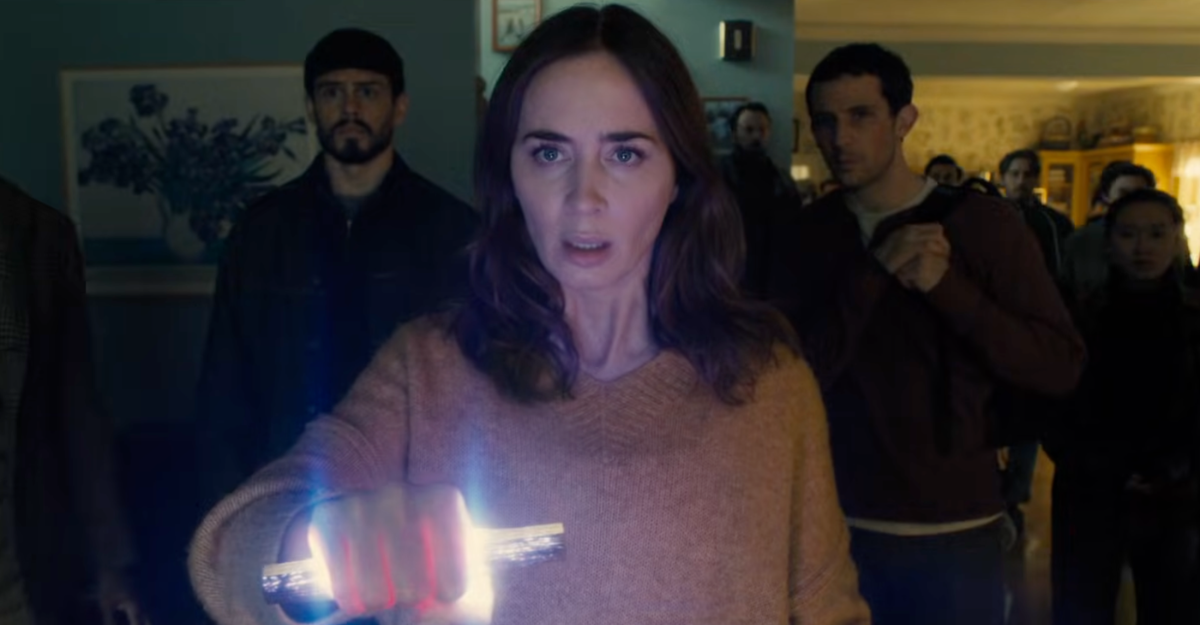
Disclosure Day review: Spielberg pours a lifetime of obsessions into an earnest, overlong sci-fi plea to an indifferent world.
A little over halfway through Steven Spielberg's Disclosure Day, Margaret Fairchild (Emily Blunt) and Daniel Kellner (Josh O’Connor) take refuge from a thrilling chase in a freight car packed with disassembled pianos. Margaret slides into a panic attack, certain the tremors moving through her hands are the first signs of the Parkinson's that took her father and has shadowed her ever since. It’s one of the more compelling scenes in the film, and for a moment I was sure that Spielberg was using it to crack the whole film open, that this was a movie functioning as an allegory about aging, memory, and losing control. It is a shame the movie never fully follows or commits to that thread. But when Disclosure Day manages to get out of its own way, it is about memory: about a plea to remember what humans are capable of when we choose to cooperate.
That plea spends most of the film buried under everything else Spielberg is trying to convey. Disclosure Day is at least twenty minutes too long, and it plays like a director emptying a career’s worth of interests into one movie. Extraterrestrials. Government cover-ups. Childhood trauma. Nostalgia. Dreamlike optimism. Horror. Chases. Monsters. All of it, all at once.
The premise is simple enough: a small group attempts to whistleblow a decades-long government conspiracy. But a number of secondary and tertiary plot points never get their due. A global military conflict, referred to once, almost offhandedly, as World War III, grinds away in the background, and the film can never decide how much it wants us to notice. In one scene, townspeople make a panicked run on a gas station convenience store, terrified by the implications of a war the movie has barely bothered to explain. Later, a director in a newsroom control room scoffs at the idea of cutting away from World War III on the feed. The war is everywhere and nowhere, urgent and ignorable--an error that becomes an accidental hallmark of the movie’s larger point: our growing talent for looking away from what should level us.
Thematically, Disclosure Day sits closest in the Spielberg catalog to 1977's Close Encounters of the Third Kind, both in its faith that ordinary people are the right vessels for first contact and, less flatteringly, in how thinly it draws nearly everyone around its leads. Spielberg, writing with longtime collaborator David Koepp, keeps handing the supporting cast backstories: a job history here, a sketched-in life narrative there, and the effort mostly underlines how opaque these people stay. They are the Bob Balabans and François Truffauts of Close Encounters, the Peter Coyotes of E.T., figures built to react to wonder rather than to convey much inner life of their own.
For one stretch, Disclosure Day turns into something closer to a spiritual sequel to E.T., which proves hit-or-miss. One dreamlike flashback scene perfectly captured the soaring magic of Spielbergian nostalgia at full power, and for a few minutes I was transported back to the best of E.T. Then the film follows that high with a chase sequence built on slapstick, the kind of pratfall choreography that worked when the pursuers were bumbling government men fumbling after kids on bicycles, but lands with a thud here, where the pursuers are black-ops paramilitary assassins stumbling after invisible quarry.
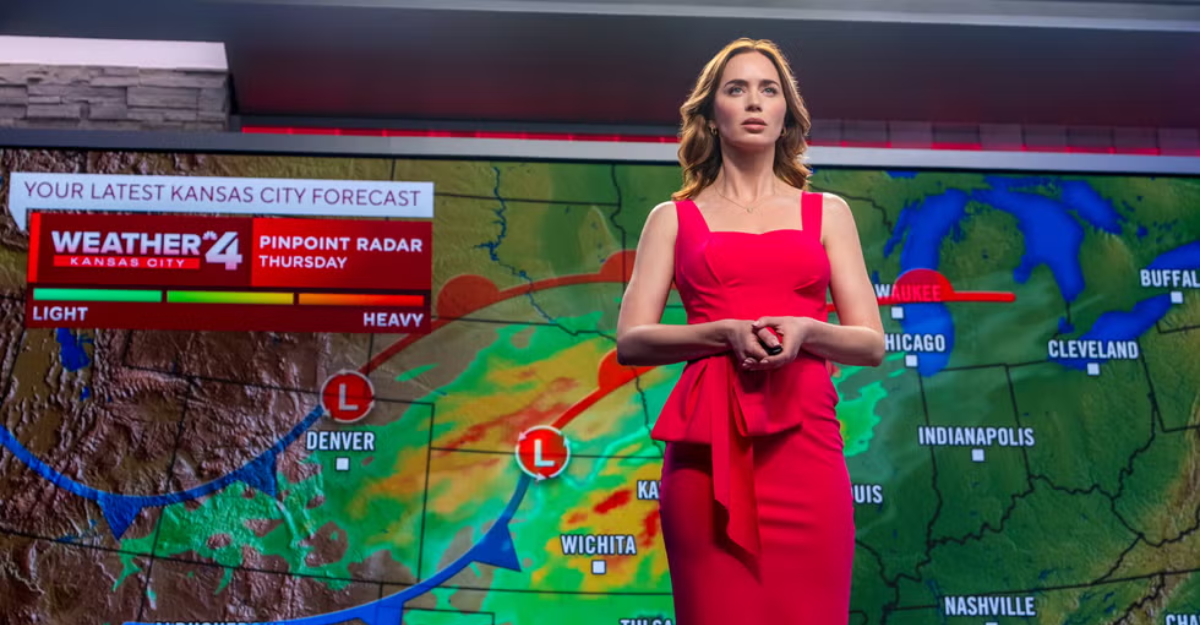
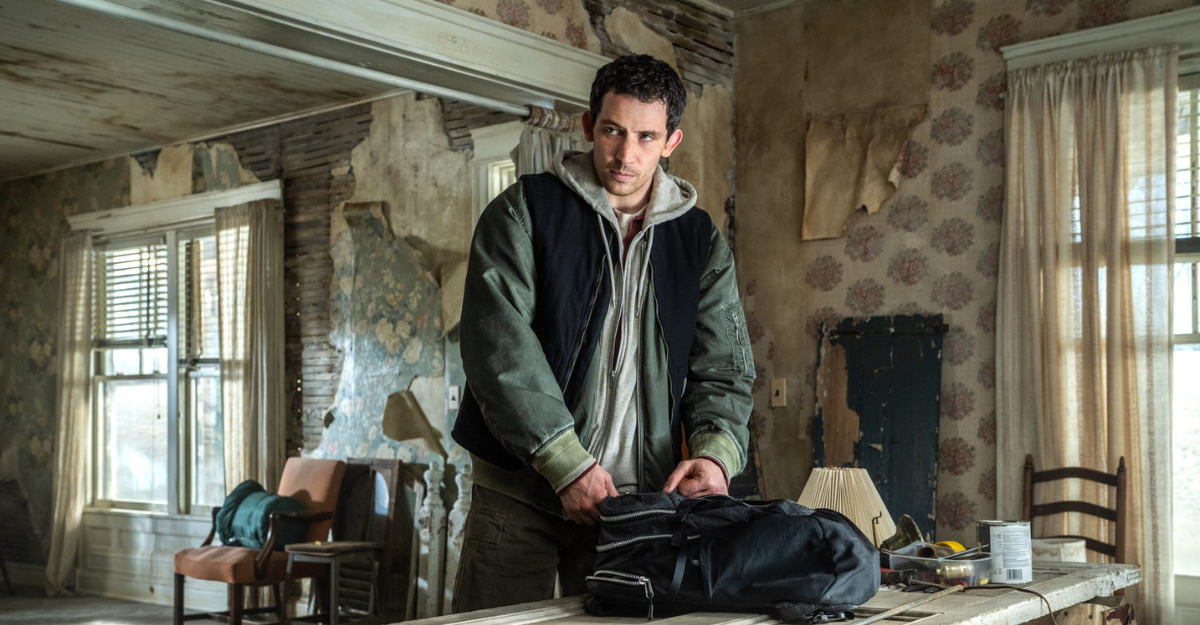
Blunt holds the emotional center even when the script leaves her little to stand on. O'Connor seems miscast, and I spent a good deal of the film trying to figure out whether the blame belonged with actor or script: it may be the relentlessly stilted dialogue he has to trade with his ex-novitiate girlfriend Jane (Eve Hewson) for most of the runtime. Perhaps an actor like Tom Holland, whatever his limits, would have slipped into this register the way he slips into the aw-shucks Peter Parker, selling the cheese without flinching. Colman Domingo, as the defector Hugo Wakefield, does what he can with what he is given. Colin Firth is game as the big bad, Noah Scanlon, head of the shadowy Wardex Corporation.
None of this makes Disclosure Day incoherent, and certainly not bad. Several reviewers have compared its themes to The Post, and while the shared point of boundless optimism in the power of good journalistic responsibility is present, it's reductive of what Spielberg is trying to accomplish . For all its faults, there are lofty ideas hinted at throughout. But it is a mishmash of Spielberg's favorite obsessions in search of a clearer story, held together almost entirely by his faith in people and his earnest conviction that we could choose one another if we simply would.
Disclosure Day was shot in 2025, before the United States government's own real-life gestures toward disclosure this spring that were met not with awe but with a shrug far larger than anything Spielberg seems to have imagined. Whether the movie's final insistence that the world's billions might listen was a late response to the headlines or the prophetic point all along, the deepest tragedy of Disclosure Day may be that Spielberg gives us far too much credit. Spielberg clearly anticipated a more seismic cultural shift than what actually materialized, and I wonder if the legacy of Disclosure Day will ultimately be that real-world resistance to truth has already made his wish-fulfillment ending feel unattainable.
The further I get from the film, the more it saddens me, because it represents the work of a man whose lifelong faith in human goodness may have finally met its match in the reality of indifference.
Disclosure Day: 5.5 out of 10.

Host
Bob grew up watching movies of all kinds, mostly with his dad. In high school, he became a fully-fledged film nerd, making and watching films regularly. He's since cooled it on his dreams to be Spielberg, and instead loves to teach about and discuss film with anyone who will listen.

Whiskey Review: Square 6 Wheated Bourbon