Whiskey Review: Bernheim Original 7-Year Wheat Whiskey

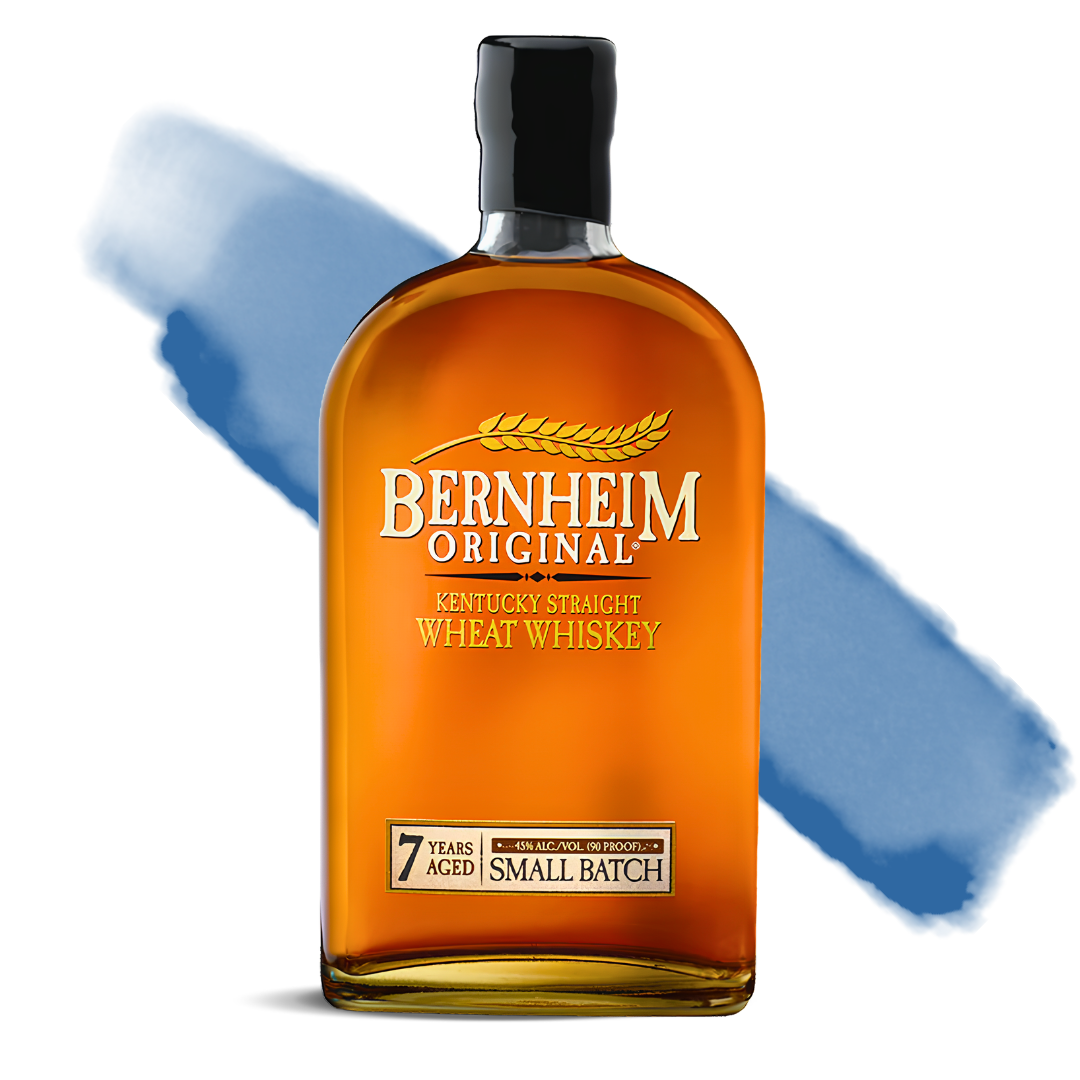
The short answer: Bernheim Original 7-Year is Heaven Hill's flagship wheat whiskey, bottled at 90 proof with a mash bill of 51% wheat, 37% corn, and 12% barley. MSRP runs $30 to $35 for a 750 mL bottle. It's a pleasant, low-complexity introduction to the wheat whiskey category, though the finish drops off. We scored it 35.5/50.
Introduction
Today on Film & Whiskey, we're reviewing Bernheim Original 7-Year Wheat Whiskey, Heaven Hill's flagship label in a category that doesn't get much shelf time on this show. Heaven Hill is one of the largest whiskey producers in America and a globally recognized brand, and yet Bernheim is rarely part of the conversation unless someone brings up the barrel-proof version. We wanted to change that.
A quick primer on wheat whiskey, since we don't cover it often. The category shares most of its DNA with bourbon, with one key swap: bourbon requires a 51% corn minimum, while wheat whiskey requires a 51% wheat minimum. Wheat whiskey also has one interesting distinction from bourbon: it doesn't have to be a product of the United States. Like bourbon, it needs to be at least two years old to be labeled "straight." We've done plenty of wheated bourbons on this podcast, but wheat whiskies proper are still rare.
Bernheim is what you might call a barely legal wheat whiskey, with a mash bill of 51% wheat, 37% corn, and 12% barley. That's only a hair over the legal minimum for the wheat classification, and the supporting grains do a lot of work here to give the profile depth. It's bottled at 90 proof, and Heaven Hill launched the line in 2005 as their signature wheat whiskey expression. The Bernheim name comes from the original distillery, which was owned by the corporate lineage that eventually became Diageo before Heaven Hill acquired it and moved their operations there after the fire at their Bardstown distillery.
One caveat before we get into the pour: wheat as a grain has a reputation for softening whiskey. It doesn't have the prickly, minty, or dill-forward character of rye. That can make it a strong candidate for cocktails, where it plays well with other ingredients rather than fighting for attention. At 90 proof, that seems like the direction Bernheim is designed to go. We were curious whether it would hold up on its own. Let's find out.
This review is taken from our episode "The Wild Robot / Bernheim Original Wheat Whiskey." Click the link to listen to this review in audio format.
Nose
Brad: This is a nice, pleasant experience. On the nose, I get cherry cola. I get honey notes, and the sugariness reminds me of frosted Wheaties. A soft, enjoyable, simple syrup sugary experience. I'll give it a 7/10 on the nose.
Bob: I don't mean to be the bearer of bad news, but I don't know that I would have ever pinpointed this as a wheat whiskey, let alone a wheated bourbon. If you'd told me this was a standard recipe bourbon with rye in it, I'd believe you. It smells like a good $30 bourbon. It's got the classic notes: caramel, pure vanilla extract up front, then baking spices, most notably cinnamon. It's simple, not complex. It doesn't smell young, thanks to the 7-year age statement. If you sat this next to an Elijah Craig, I don't know that I'd think it was too far out of that wheelhouse. As it opens up, I'm getting a ton of root beer on the nose. I've been pounding root beer floats lately since it's the middle of summer. I'll give it a 7.5/10 on the nose.
Taste
Brad: The palate is pleasant. The cherry syrup comes through. For me, it reminded me of Malt-O-Meal with brown sugar on top. It's nothing that's going to blow you out of the water. It does remind you of a classic bourbon with more of that malted barley characteristic, softer. I'll give it a 7.5/10.
Bob: The few wheat whiskeys we've had on the podcast tend to drink noticeably thinner and hotter for me. This is no different. It is 90 proof, so it's thinned out, but even the mouthfeel doesn't have the viscosity you'd get with a 7-year bourbon at this same proof point. I'm with you, Brad, on cherry syrup, especially a bitter dark cherry note. Not quite a Luxardo cherry, more like a pretty bitter, dark cherry. Once it hits the back of your tongue, it falls off a cliff. All the flavor is concentrated in the mid-palate and front. This is a $35 whiskey, so we're grading on a curve, but it's a step down from the nose. I'll give it a 7/10.
Finish
Bob: The way I would describe it on my palate is prickly. If there's anything wrong with this whiskey, it does fall off a cliff. The notes lingering on the finish are bitter, an almost cherry-pit bitterness, with quite a bit of char on the back. The lingering flavors have a bittering quality. It's not tannic and it doesn't dry my mouth out, but I wonder how it would mix in a cocktail. If I was making an old fashioned with this, I'd almost use walnut bitters, something with fattiness to balance that out. I like it, but I'm incrementally stepping down with every stage. I'll give it a 6.5/10 on the finish.
Brad: The finish, for me, goes from being a fresh bowl of Malt-O-Meal with brown sugar and honey on it to scraping the bottom, where it got burnt and has a carbony taste. It gets dusty. It reminds me of an almond with the dustiness on a bag of nuts. I still like the finish, but it's fallen off. I'll give it a 6.5/10.
Balance
Bob: I'm tempted to give this a 7 out of 10, and part of that is influenced by how inexpensive it is. Being honest, this is a 6.5 whiskey. It's pretty good and it's not harming anybody, but it's also nothing to write home about. I'll give it a 6.5/10 on balance.
Brad: I'll give it a 7.5/10 on balance. You have solid flavors all around. There's nothing missing in the experience. It's not super complex.
Value
Bob: The market for wheat whiskey is smaller and there's less demand, so Heaven Hill was able to add a 7-year age statement because they had wheat whiskey sitting around at that age. It's rare to find a 7-year age statement on any whiskey at $35 or less anymore, and I appreciate that. That said, if this were a bourbon, it would be at the Benchmark level for me. It would be a $20 to $25 bottle based on taste alone. Balancing the age statement value against the flavor, I'll give it a 7.5/10 on value.
Brad: Around $30 to $33, let's call it a $32 bottle of whiskey. At $32, this is a 7.5/10. It's a solid pour at an affordable price that anybody can grab off the shelf. It's widely available across the country. You're not paying secondary prices for it. It's a pleasant, easy sipper that gets you into the world of wheat whiskies at an accessible price point.
Final Scores
Bob: My final score is 35/50 on the dot.
Brad: I'm at 36/50.
Conclusion
We're coming out to a combined score of 35.5/50 (or 71/100), which puts Bernheim Original 7-Year just past the 35/50 threshold where we'd typically start recommending you seek out a pour at a bar or pick up a bottle. For reference, 40/50 is a no-brainer and 45/50 is excellent. Bernheim isn't quite hitting the "buy a bottle without thinking" tier for us, but Bob has seen it at his local whiskey bar for $7 a pour, which is exactly the right context for this whiskey. It's an easy way to try a category that most drinkers rarely explore, without committing to a full bottle. If you've never had a wheat whiskey and you want to know what all the wheat fuss is about, this is a fair, low-risk entry point.
Frequently Asked Questions
Is Bernheim Original 7-Year Wheat Whiskey worth the price?
At $30 to $35 MSRP, yes, especially if you've never tried a wheat whiskey before. We scored it 7.5/10 on value combined. Bob notes that if it were a bourbon, it would land at the Benchmark tier, so the value proposition is largely tied to the rare 7-year age statement and the category exposure it provides.
What does Bernheim Original 7-Year Wheat Whiskey taste like?
The nose brings cherry cola, honey, frosted Wheaties sweetness, caramel, vanilla extract, and root beer. The palate delivers cherry syrup, Malt-O-Meal with brown sugar, and a softer bourbon character with malted barley notes. The finish drops off with cherry pit bitterness and a dusty, almond quality. Overall, low complexity but pleasant.
How is wheat whiskey different from bourbon?
Wheat whiskey requires a mash bill of at least 51% wheat, compared to bourbon's 51% corn minimum. It shares most other bourbon requirements, including new charred oak aging and no additives, but unlike bourbon, wheat whiskey doesn't have to be produced in the United States. Wheat generally softens the profile, producing less spice than rye-heavy bourbons.

Host
Bob grew up watching movies of all kinds, mostly with his dad. In high school, he became a fully-fledged film nerd, making and watching films regularly. He's since cooled it on his dreams to be Spielberg, and instead loves to teach about and discuss film with anyone who will listen.

Whiskey Review: Square 6 Wheated Bourbon